
Guides
Car wash cash flow: the basics, the traps and the fixes
Car wash cash flow starts with cars per hour, capture rate, billing edge cases and membership churn, not a borrowed benchmark from another site.
What to take away
- Car wash cash flow basicstwo numbers decide the week, a short list of traps drains it, and a few fixes hold the line.
- Cars per hour is a capacity number, not a demand number. Measure both or the gap stays invisible.
- Capture rate is the share of cars in the lot that buy the top package. It moves faster than traffic does. On 30,000 cars a year, a two-point capture drop is 600 washes, or about $4,800 in upgrades at an $8 top package.
- Plate and tag data need a stated purpose and a retention date before the camera goes up.
- Failed payments, plate changes and household plans are the membership edge cases that quietly drain cash.
- Rent, consumables, labor and tunnel equipment behave differently when a week goes badly.
This article covers car wash cash flow and operations generally. Water discharge, stormwater, licensing, employment and tax rules vary by state and municipality. Confirm current requirements with your state environmental agency and local sewer authority. Also consult your permit office and a qualified CPA or attorney. Do this before you commit money.
Start with the two numbers that decide the week
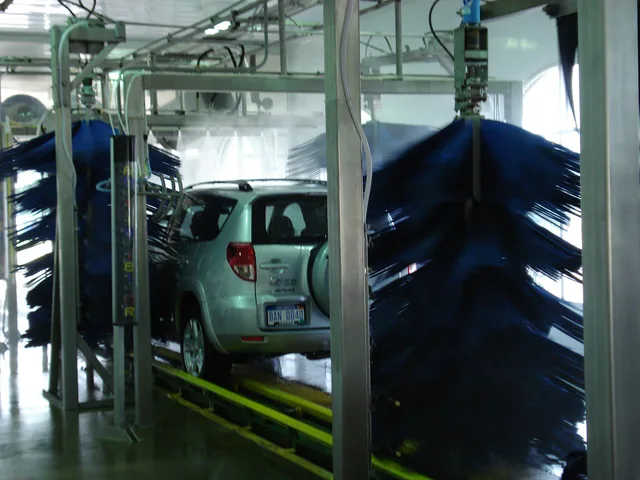
A tunnel rated at 120 cars per hour does not wash 120 cars. Cycle time, stacking space and payment speed set the real ceiling. In most markets a 120-car express tunnel clears 70 to 90 cars in a steady weekday hour and gets closer to its rating on a Saturday.
Cars per hour and capture rate
- 120tunnel rated cars per hour
- 70-90real weekday cars per hour
- 15-25%capture rate at express exterior
- 600washes lost on 2-point capture drop
Track cars per hour and capture rate together. Cars per hour tells you what the equipment and staff can clear. Capture rate tells you how many of those drivers bought the good package, typically 15 to 25 percent of cars at an express exterior site.
The two numbers compound. Fast payment and clear package signage at the pay station lift capture more than an extra attendant does.
Point-of-sale and control systems log both numbers. DRB Systems in Akron, Ohio sells SiteWatch to express tunnels, and Innovative Control Systems in Kutztown, Pennsylvania supplies controllers and pay stations.
The software and KPI guide covers which of these numbers to log and who owns each one. Assign one person to the dashboard. A number nobody owns is a number nobody checks.
Vehicle and plate data: consent before cameras
License plate recognition and RFID tags collect personal data. Decide what you need before you buy the camera. A monthly membership needs a plate or tag to match a car to an account. A marketing list does not.
Vehicle data consent checklist
- Decide needed data before buying camera
- Write purpose and fields collected
- Note who can see and vendor access
- State retention period
- Explain customer deletion request
- Check state privacy statute and processor terms
Write down the purpose and the fields. Note who can see them and which vendors touch them. State how long you keep them. Explain how a customer asks for deletion. Then check your state privacy statute and your payment processor's terms, because both can add duties beyond the federal baseline.
California's SB 34 is a working example. It requires ALPR operators to publish a usage and retention policy, log access, and limit sharing with outside agencies. Vendors that sell plate reads include Genetec AutoVu, Motorola Solutions and Flock Safety. Wash POS vendors such as DRB and ICS sell their own tag and plate modules.
The National Institute of Standards and Technology publishes Small Business Quick-Start Guides that walk a small operator through privacy and cybersecurity risk in plain steps. Use them as a starting checklist, not a legal opinion.
Membership billing traps and the fixes
Most membership revenue leaks at the edges, not the center. Test these five before you scale:
Membership billing traps to test
- Card fails on renewalretry, pause, or free?
- Member sells carnew plate inherits plan?
- Two cars on one household planboth read?
- Member cancels mid-cyclerefund and gate stop?
- Chargeback arriveswho pulls account and how fast?
- Failed payments and expired cards. A decline on the first attempt is the common case. The fix is a retry schedule plus a gate rule for accounts that go past due.
- Plate or tag changes. A member trades a car or replaces a plate, the tag no longer matches the account, and the wash is denied or given away. The fix is a self-serve update path at the pay station or in the member app.
- Household and multi-car plans. One membership, several vehicles, and no written cap on how many plates ride on one account. The fix is a written cap and a charge for extra vehicles.
- Trials and negative-option signups. A free or discounted first month converts on a date the customer may not have registered. The fix is a reminder before the first charge, consistent with the federal rules below.
- Cancellations and chargebacks. A member cancels but the billing keeps running, or disputes a charge that was valid. The fix is a dated cancellation record and a written response to each dispute.
Unlimited clubs typically lose 4 to 8 percent of members a month. Failed payments typically touch 2 to 5 percent of monthly billings. Both numbers look small until they sit on 4,000 members.
Recovery is mostly plumbing. Keep the card on file current, retry on a schedule, and give the gate a rule for accounts past due. Decide who can waive a balance, and how much they can waive without a second signature.
Cash-flow timing is a separate question. Card settlements typically fund one to three business days after the batch closes, so a Friday membership charge may not reach the bank until the following week.
The Federal Trade Commission's ROSCA recap explains the federal rules for negative-option offers: disclose the terms before you take card details, get clear consent before charging, and make cancellation simple. State law can add more.
Where the money goes, side by side
Where the money goes
| Cost line | How it behaves | What to watch |
|---|---|---|
| Rent, insurance, software | Fixed. Due whether or not a car enters the bay. | Rent typically runs $5,000 to $15,000 a month in a metro market; commitments signed in a strong month |
| Water, chemicals, consumables | Move with car count, not revenue | A tunnel typically uses 30 to 60 gallons a car; combined water and sewer typically $5 to $12 per 1,000 gallons; soap, wax and drying agent typically $0.40 to $1.20 a car. Waste nobody measures |
| Labor | Usually the largest line | Typically 20 to 30 percent of revenue at an express exterior wash; overtime through spring pollen and winter road salt |
| Card processing | Moves with revenue | Typically 1.8 to 2.9 percent of the ticket plus 10 to 25 cents a transaction |
| Tunnel equipment | Deferred easily, expensive when deferred | Conveyor, blower and brush wear items; a breakdown on a sunny Saturday |
Labor is the line most operators get wrong first. Attendants typically start at $13 to $18 an hour, and assistant managers at $18 to $24. The pay rates and labor costs guide shows where a wage number actually starts, including the payroll taxes and coverage that sit on top of the hourly rate.
Cost lines: behavior and watch points
Cost line
- Rent, insurance, software
- Fixed
- Water, chemicals, consumables
- Moves with car count
- Labor
- Largest line
- Card processing
- Moves with revenue
- Tunnel equipment
- Deferred easily
How it behaves
- Rent, insurance, software
- Metro rent $5k-$15k/mo
- Water, chemicals, consumables
- 30-60 gal/car; $0.40-$1.20/car
- Labor
- 20-30% of revenue; overtime spikes
- Card processing
- 1.8-2.9% + 10-25 cents
- Tunnel equipment
- Breakdown on sunny Saturday
What to watch
- Rent, insurance, software
- Water, chemicals, consumables
- Labor
- Card processing
- Tunnel equipment
Rent, insurance and software are the fixed side of that table. A typical express exterior wash pays $10,000 to $30,000 a year for coverage, depending on state, limits and claims history. The insurance costs and coverage guide treats coverage as a decision to document and revisit, not a premium you accept once and forget.
A worked week ties the two numbers to that table. A 120-car tunnel that clears 70 cars in a steady weekday hour, over 60 weekday hours, plus 90 an hour for 10 Saturday hours, washes about 5,100 cars a week.
At a 20 percent capture rate, 1,020 of those cars buy the top package. The $8 upgrade puts about $8,160 a week on the top line before any single-wash revenue. Drop capture to 15 percent and the same traffic carries about $6,120 of upgrades.
Now subtract the table. Labor at 20 to 30 percent of revenue, rent fixed at $5,000 to $15,000 a month, card processing at 1.8 to 2.9 percent, and water and chemicals that move with the 5,100 cars. In the week capture slips, rent and labor do not move with it.
Three fixes pay for themselves. Put a meter on the reclaim line and log gallons per car. Titrate chemicals monthly instead of trusting the drum label. Build the weekly schedule from the last four weeks of car counts, not from a template.
Keep records that survive an audit
The Internal Revenue Service's guidance on what records to keep allows any system that clearly shows income and expenses, as long as you keep the documents behind purchases, sales, payroll and assets. Match that to your wash: a daily cash close, monthly water and chemical use, and equipment service logs.
Records that survive an audit
- Daily cash close
- Monthly water and chemical use
- Equipment service logs
- Reconcile metrics across periods and sites
- Check demand, capacity, training, pricing, data quality
Reconcile the same metrics across periods and sites on a fixed schedule. When a number weakens, check demand, capacity, training, pricing and data quality before you change the standard.
Common questions
What is a realistic cars-per-hour figure for a tunnel?
A 120-car rating assumes a 30-second cycle with no gaps. Real tunnels lose time to payment, loading and stacking. Measure your own site across a full week, including a Saturday, rather than quoting a manufacturer's rated maximum.
Does capture rate matter more than traffic?
Neither replaces the other. Traffic sets the ceiling; capture rate decides how much of that traffic pays full price. A site with strong traffic and weak capture loses money quietly.
How often should membership billing be tested?
Run the edge cases in the list above at least quarterly, and again after any software or pricing change. The startup costs and funding options guide shows how quickly those exceptions can hit a first-year cash position.