Guides
Car Wash Bay Throughput Calculation: Cars per Hour Benchmarks by Type
Car wash bay throughput calculation turns conveyor speed and cycle time into an honest cars-per-hour figure. Here is the sequence, the checks and the benchmarks.
What to take away
- Throughput is cycle time converted to an hourly rate, not a number printed on a brochure.
- Express tunnels in Texas commonly run 100 to 140 cars per hour; Northeastern in-bay automatics run 30 to 45.
- The step that decides your number is measuring the slowest station in the chain, not the conveyor.
- Two consecutive readings within 5 percent of each other mean the figure is stable enough to use.
- If the bottleneck sits in equipment or electrical work, stop and call a licensed contractor.
What has to be true before the first step
You need a clean stopwatch, a counter, and one full hour of normal traffic. Pick a weekday between 10 a.m. and 2 p.m., when demand is steady rather than spiking.
Confirm the site is running its normal wash package mix. A lane that is 80 percent basic washes will post a faster rate than one selling ceramic upgrades, and the difference is real, not measurement error.
Write down the conveyor speed setting in feet per minute. Express tunnels typically run 100 to 140 feet per minute, and that figure anchors everything downstream.
The sequence
- Record the entry time of the first car and the entry time of the second. Repeat for 20 consecutive cars.
- Average those gaps. That average is your cycle time in seconds.
- Divide 3,600 by the cycle time. This is gross cars per hour at the entrance.
- Walk the tunnel or bay and time each stationpre-soak, mitter, rinse, blower, pay station, vacuum.
- Identify the slowest station. Subtract its excess time from the gross figure.
The step that decides the result
Step five decides everything. Most operators time the conveyor and stop, which produces a number that never survives a Saturday.
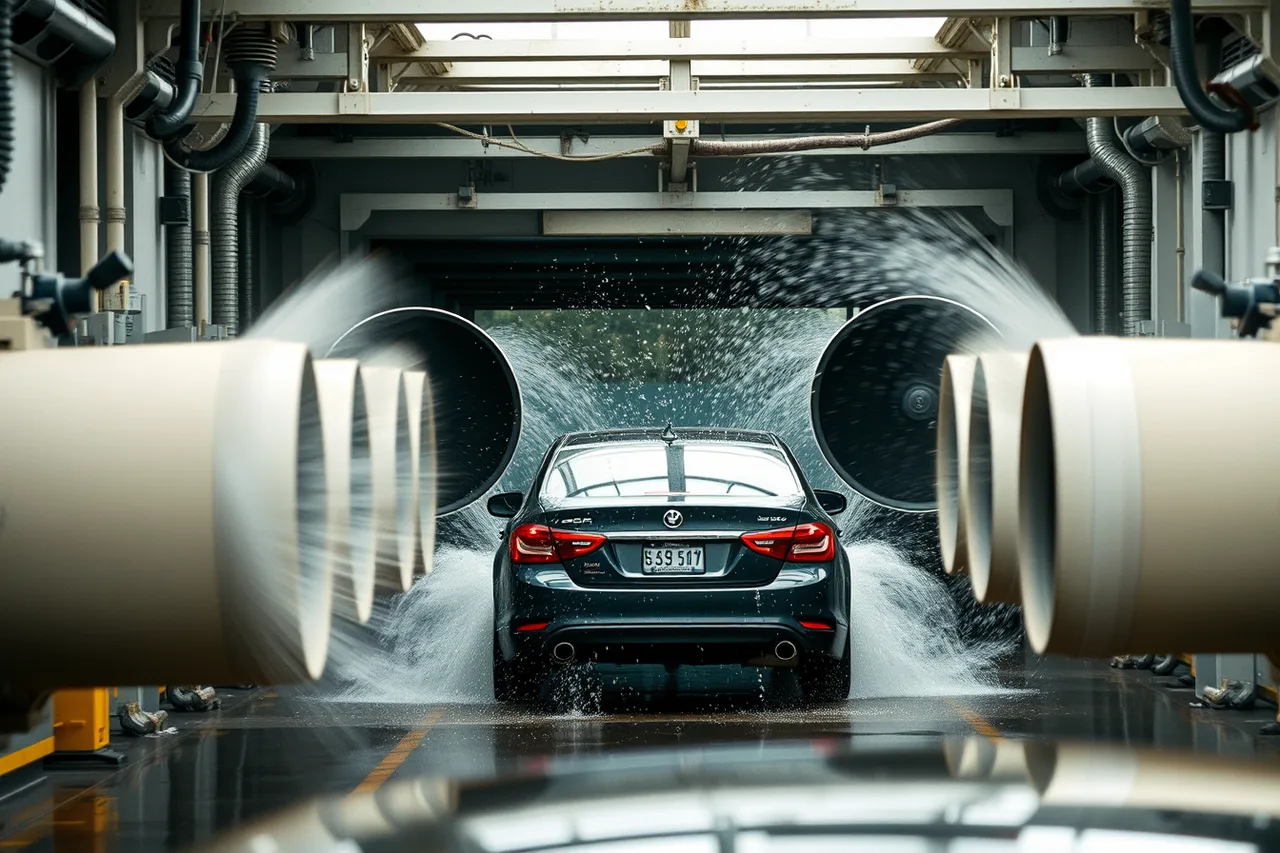
The bottleneck is usually the dryers or the pay station, not the wash itself. A blower bank that takes 40 seconds per car caps a tunnel at 90 cars per hour no matter how fast the conveyor moves.
Queueing theory explains why: arrivals bunch, service is fixed, and the line absorbs the variance. The principles of queueing theory apply directly to lot design and lane count. The ASTM notes on designing car wash facilities cover layout and queue flow in the same terms.
Benchmarks by format
| Format | Region | Cars per hour | Basis |
|---|---|---|---|
| Express tunnel | Texas | 100 to 140 | Conveyor 100 to 140 fpm, illustrative range |
| Flex serve tunnel | Midwest | 60 to 90 | Wash plus limited interior, illustrative |
| In-bay automatic | Northeast | 30 to 45 | Single-bay cycle time, illustrative |
| Self-serve bay | National | 8 to 15 | Per bay, weather dependent, illustrative |
| Hand wash | Urban coastal | 6 to 12 | Labor bound, illustrative |
The overview of car wash types lists typical throughput ranges for these formats and is worth reading before you set a target. Treat every figure above as a range to test against, not a promise.
How to check each step came out right
- Two consecutive hourly counts land within 5 percent of each other.
- The calculated rate matches the count at the exit, within 10 percent.
- The slowest station is identified by name, not by feel.
- Conveyor speed in feet per minute is written down and dated.
- The rate holds across two different days of the week.
If the exit count runs well below the entrance count, cars are stacking inside the tunnel. That is a drying or conveyor problem, and the entrance rate is fiction.
What to do when a step goes wrong
The common failure is a rate that swings by more than 20 percent between hours. The recovery is to re-time the pay station and the blower separately, then rebuild the average from those two numbers only.
A second failure is a rate that looks good on paper but produces a long line in the lot. Check the vacuum and pay station count against your lane length, and consult the NFPA 30A site design requirements where fuel dispensing shares the lot.
Example
A Texas express tunnel runs its conveyor at 120 feet per minute and posts 132 cars per hour at the entrance. The blower bank takes 38 seconds per car, which caps the site at 95 cars per hour.
Adding one blower unit brings the station to 26 seconds and the site to 138 cars per hour. The conveyor never changed. Only the bottleneck did.
When to stop and hand it to a professional
Stop when the fix requires new electrical service, a conveyor rebuild, or changes to the pay station wiring. Those jobs belong to a licensed electrician working to OSHA electrical safety standards and local code.
Stop when the calculated rate cannot be improved without moving walls, adding a lane, or re-grading the lot. That is a capital project, not a throughput tune-up.
Before a rebuild, work through the margin math behind a car wash business to tie extra cars per hour to dollars. If leased, read car wash lease costs first; lane changes often need landlord consent.
Equipment choices that cap throughput are covered in car wash equipment and setup, and to staff a faster line, see finding good staff.