Guides
Canadian winter bay practice vs US northern car wash operations
Car wash business operations in Canada and the US North differ on bay heating, brine management, and winter throughput, and here is what carries over.
What to take away
- Car wash business operations in Canada lean on closed bays, in-floor heat and strict brine control, while US northern-state operations more often run open tunnels with chemical deicers.
- Canadian bay heating practice favors hydronic slab heat and vestibule air curtains; US northern states lean on forced-air unit heaters and radiant tube heaters.
- Brine management decides equipment life more than wash volume does. Rinse frequency, stainless grades and door seals separate a ten-year bay from a five-year bay.
- Winter throughput practices differ by cycle time, not by traffic. Canadian sites bank on memberships and undercarriage add-ons; US sites chase express volume.
- Equipment and layout choices that carry oversloped aprons, trench drains, freeze-protected weep systems, and a heated equipment room.
- Copy Canadian brine discipline and door design. Skip their smaller bay counts and longer cycle times if your market is express-driven.
Why Canadian winter practice diverges from US northern states
Canadian winter starts earlier and lasts longer. Frost depth, not air temperature, drives most of the design difference. A bay slab in Manitoba or Alberta must sit below a frost line that can run several feet down, and that single number reshapes the whole building.
Canada vs US North Winter
Canada
- Winter season
- Six months
- Frost depth
- Several feet
- Winter staffing
- Tighter
- Automation push
- Stronger
US North
- Winter season
- Four months
- Frost depth
- Shallower
- Winter staffing
- Deeper pool
- Automation push
- Weaker
US northern-state operations face the same cold but a shorter season. A wash in Buffalo, Cleveland or Minneapolis can plan for a hard four months and a shoulder season on each side. A wash in Saskatoon plans for six.
Road salt chemistry is similar on both sides. Application rates are not. Canadian provinces and US northern states both spread salt and brine, and the resulting chloride load on a wash bay is the same problem with a different calendar.
Labor markets differ too. Canadian operators report tighter winter staffing, which pushes them toward automation and self-serve lanes. US operators in the Northeast and Midwest have deeper seasonal labor pools and keep more attendants on the lot.
None of this is about national character. It is about frost depth, season length and how each market sells its wash. Those three variables explain most of the divergence.
The frost line sets the budget
Frost depth determines footing depth, slab insulation and drain burial. Get it wrong and the apron heaves in the first hard freeze. That repair costs more than the insulation would have.
Season length sets the sales model
A six-month winter rewards unlimited memberships. A four-month winter rewards per-wash volume and express upsells. This is the clearest split between the two markets.
Bay heating approaches on both sides of the border
Canadian bay heating practices center on keeping the slab above freezing, not the air. Hydronic tubing cast into the slab, fed by a boiler or heat pump, is the default in new Canadian builds. Air temperature in the bay can sit near freezing while the floor stays dry.
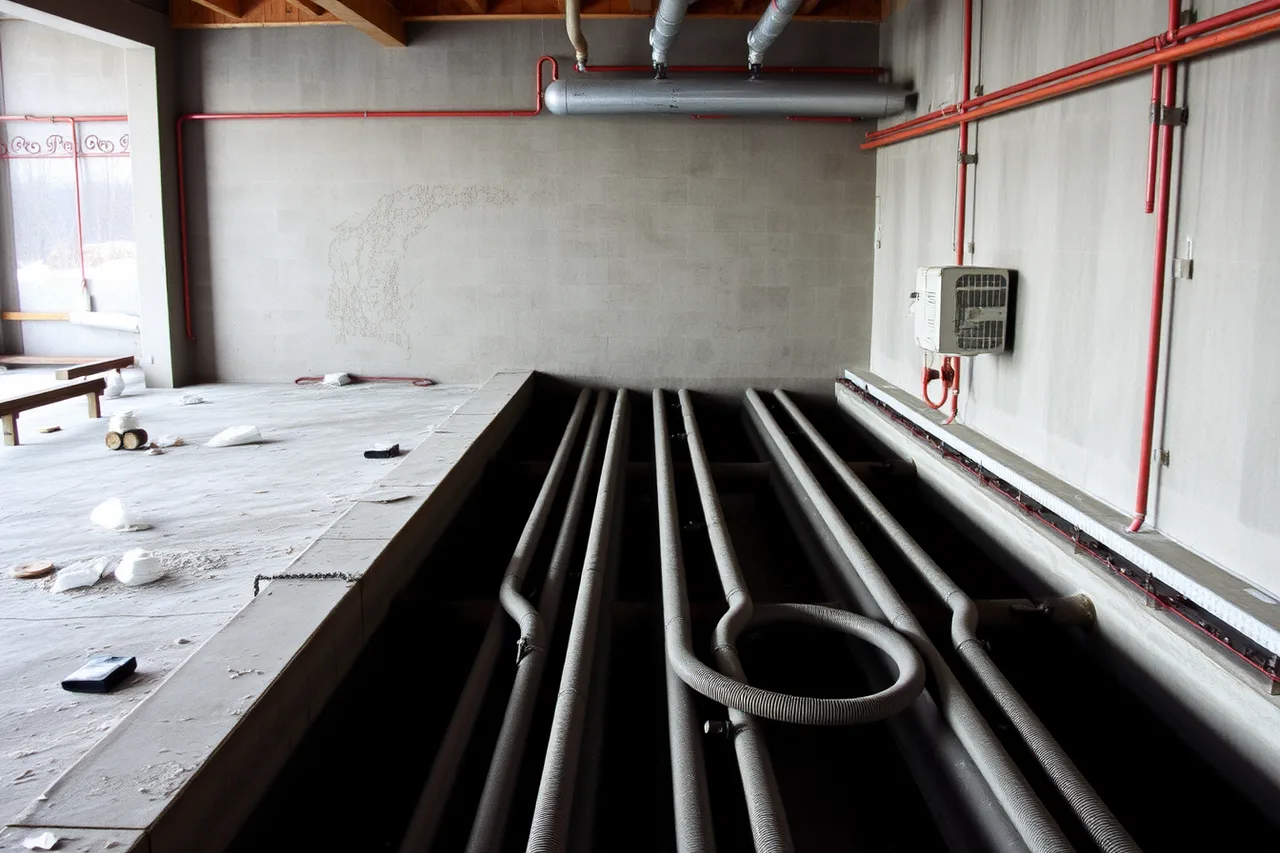
US northern-state operations more often heat the air. Forced-air unit heaters and radiant tube heaters are cheaper to install and faster to react. They also leave the slab cold, which is why US bays ice at the door line and Canadian bays do not.
Radiant tube heaters warm people and surfaces, not air, so they work well in open tunnels with constant air exchange. Hydronic slab heat works well in closed bays with doors. Each matches its building type.
The energy story matters. Electricity prices and heating fuel prices vary widely by state and province, and the U.S. Energy Information Administration publishes the state-level data operators use to compare. See the EIA electricity data for rates before you size a heater.
Waste heat recovery is the quiet Canadian advantage. Boiler flue gas, compressor heat and even dryer exhaust get captured and returned to the slab loop. US sites often vent that heat to the sky.
Air curtains and vestibules
A Canadian bay usually has a vestibule or an air curtain at the door. It keeps the warm envelope in and the salt spray out. US open tunnels cannot use one, so they rely on drainage slope and dryer placement instead.
Controls and setpoints
Canadian slabs run a lower setpoint than most US operators expect, often just above freezing. The goal is a dry floor, not a warm room. US forced-air systems run hotter air and colder floors.
Brine management and its effect on equipment life
Brine management is the single most underrated line item in winter car wash business operations. Road brine is a chloride solution, and chloride attacks stainless steel, aluminum, concrete and electronics.
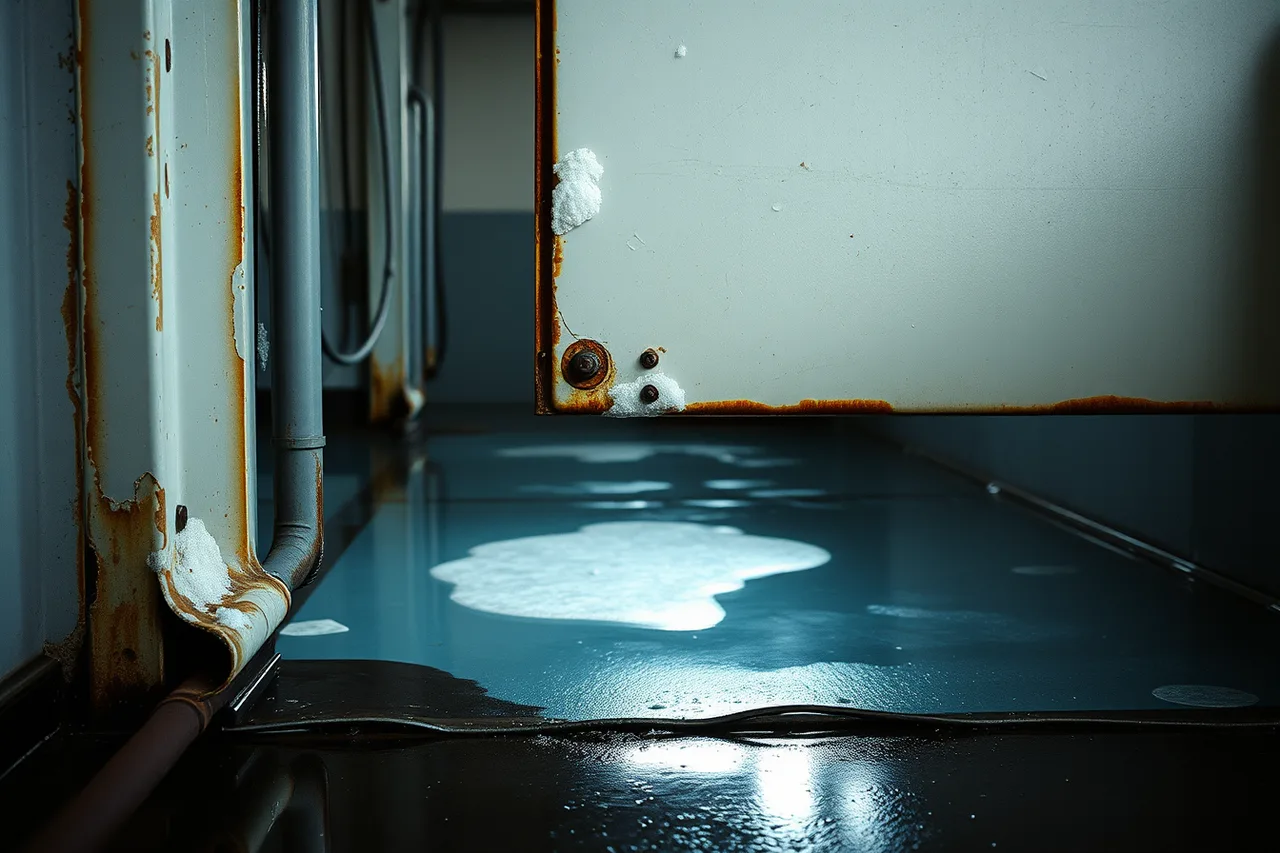
Every vehicle that enters your bay carries brine in its wheel wells, rocker panels and undercarriage. That brine drips onto your floor, your conveyor, your blower housings and your control cabinets. Where it pools, it eats.
The fix is dilution and dwell time. Fresh water rinse cycles, frequent floor flushing and trench drains sized for winter flow all reduce chloride concentration. Standing brine is the enemy.
Material choice matters more than coating. Specify 304 or 316 stainless for wet frames, and avoid bare aluminum near the door line. Galvanized steel is a compromise that fails at the weld seams first.
NOAA climate data helps operators map how many freeze-thaw cycles and how much precipitation their site will see, which drives salt application on the roads around them. The NOAA climate records are a reasonable starting point for that planning.
Door seals and the salt line
The salt line is the height brine splashes to on your walls and doors. Below it, everything needs a chloride-resistant surface. Above it, standard finishes are fine. Design to the line, not to the whole wall.
Wash water recycling and chloride
Recycled water concentrates chloride over time. If you recycle, you need a bleed or purge rate that keeps dissolved solids in check. Test conductivity weekly in winter, not monthly.
Electrical enclosures
Control cabinets near the bay entrance should be rated for washdown and mounted above the salt line. A cabinet that fills with brine mist will fail in one season. This is a cheap fix at build time and an expensive one later.
Winter throughput numbers compared
Winter throughput practices split into two models. Canadian sites generally run fewer cars per hour with more dwell time, because their bays are closed and their customers expect a slower, more thorough wash. US northern-state express sites run high volume with short cycle times.
Winter Throughput Models
Canadian closed bay
- Cycle time
- 3 to 5 minutes
- Winter days
- Longer season
- January dip
- Longer, higher floor
- Demand tool
- Memberships
US northern express
- Cycle time
- 30 to 45 seconds
- Winter days
- Shorter season
- January dip
- A third or more
- Demand tool
- Express volume
A closed Canadian bay might cycle a car in three to five minutes including dry. A US express tunnel in the same climate might run a car every thirty to forty seconds. The gap is not efficiency. It is a different product.
NOAA weather data for the northern tier shows how many days each winter fall below freezing and how many carry precipitation. That count is the real capacity constraint. The NOAA weather data helps operators estimate lost days before the season starts.
Freeze days cut throughput two ways. They slow the equipment, and they cut the hours customers are willing to stand outside. Canadian operators plan for both by pushing memberships, which smooth demand across bad days.
US operators in the Northeast and Midwest often see a January dip of a third or more against October. Canadian sites see a longer dip but a higher floor, because their members keep coming.
Canadian closed bay
- Typical cycle time
- 3 to 5 minutes
- Winter days below freezing
- Longer season
- Primary revenue model
- Membership and add-ons
- Bay heating method
- Hydronic slab heat
- Brine exposure
- High, long season
- Door strategy
- Vestibule or air curtain
- Staffing in winter
- Lean, more automation
US northern express tunnel
- Typical cycle time
- 30 to 45 seconds
- Winter days below freezing
- Shorter, sharper season
- Primary revenue model
- Per-wash volume and upsells
- Bay heating method
- Forced air and radiant tube
- Brine exposure
- High, shorter season
- Door strategy
- Open tunnel, sloped drainage
- Staffing in winter
- Deeper seasonal pool
Measuring your own throughput
Track cars per labor hour, not cars per day. Winter hides labor problems behind low volume. If your cars per labor hour drops in January, you have a staffing or layout issue, not a weather issue.
The membership floor
Memberships set a floor under winter revenue. Canadian operators learned this first because their season is longer. US operators in cold states can use the same tool to protect January cash flow.
Equipment and layout choices that carry over
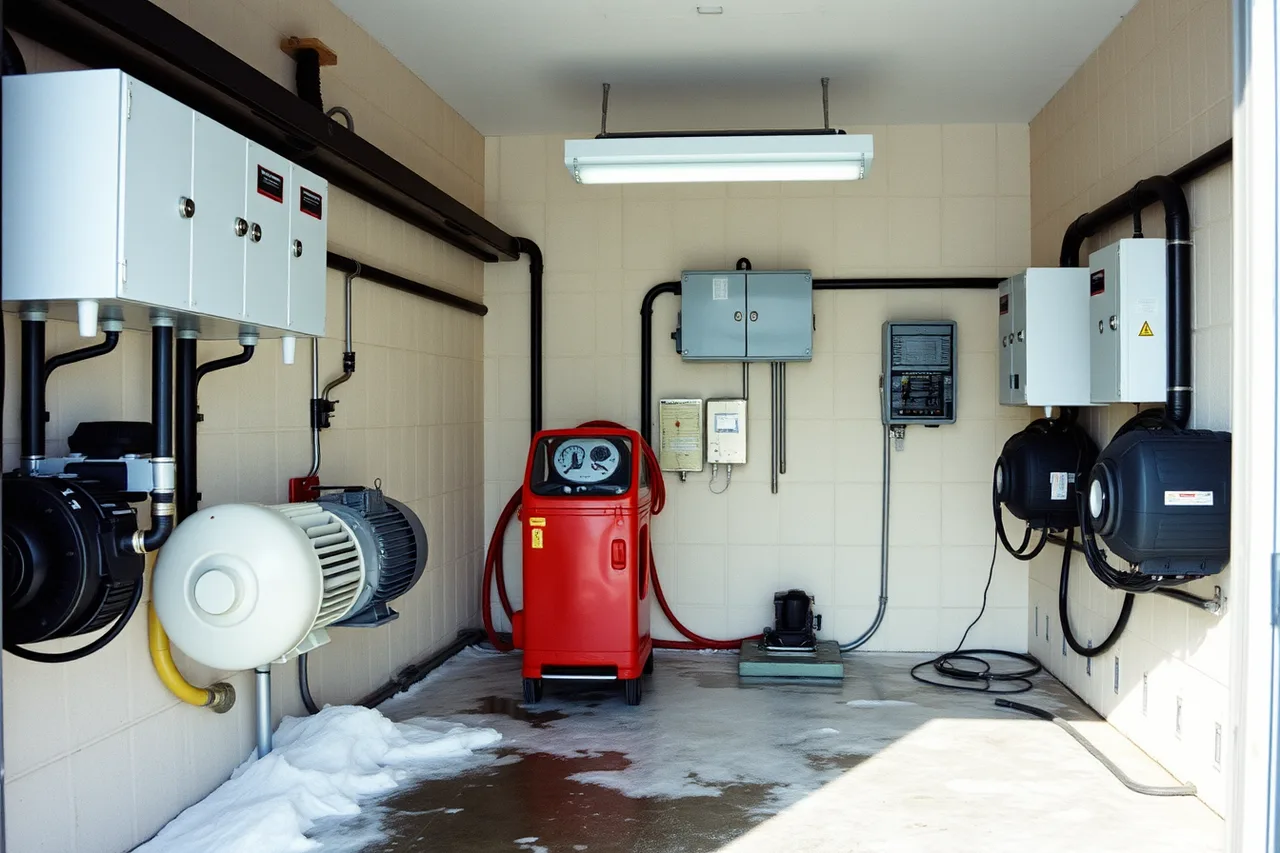
Equipment and layout choices that carry over from Canadian practice are mostly about water, slope and enclosure. They cost little at build time and save a great deal later.
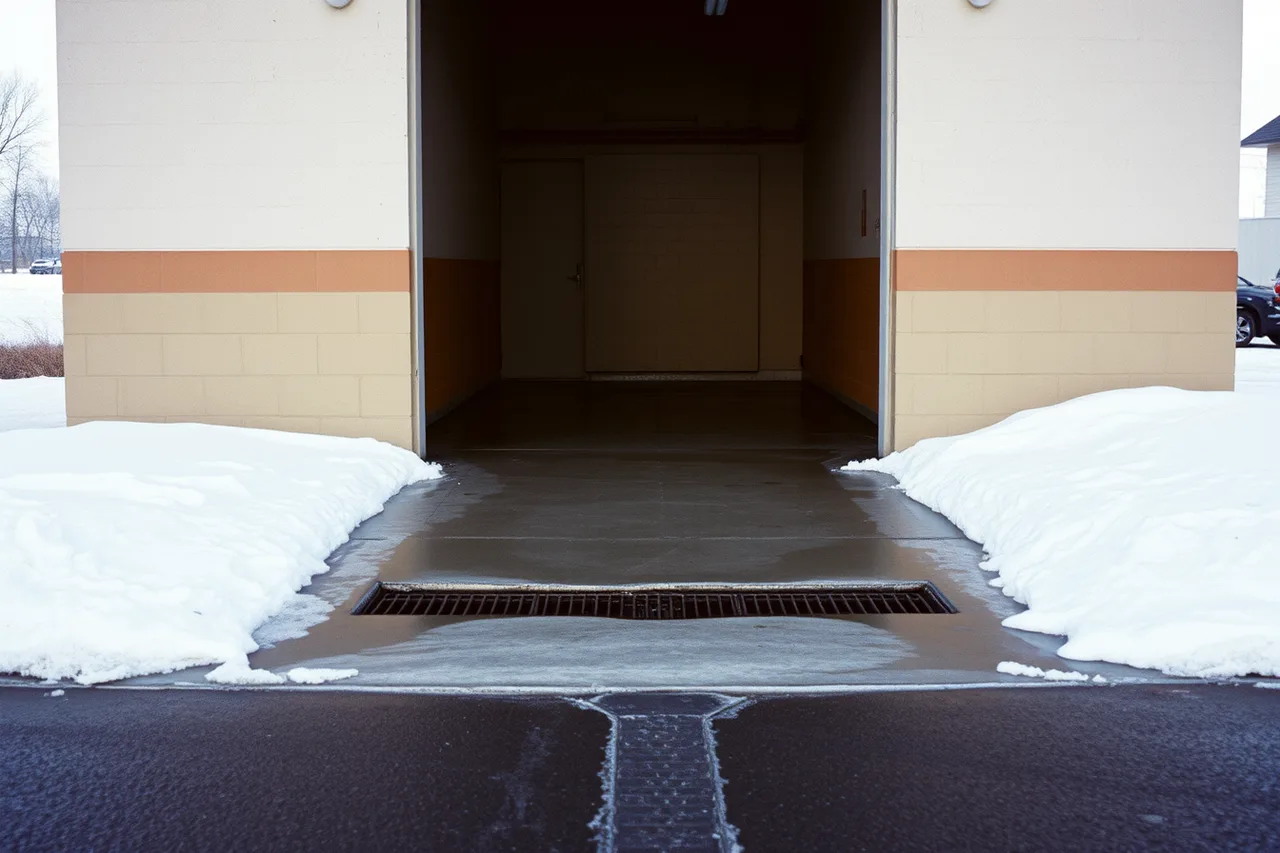
Start with the apron. A sloped apron that sheds water away from the bay door prevents the ice dam that forms at the threshold. Canadian sites grade this aggressively. Many US sites do not.
Next, trench drains. Size them for snowmelt and brine, not for average wash flow. A drain that backs up in February floods the bay and freezes overnight.
Then, weep systems. Freeze-protected weep lines keep nozzles and arches from splitting. This is standard on both sides of the border, but the maintenance interval is shorter in Canada.
Finally, the equipment room. A heated, sealed equipment room keeps pumps, motors and control panels above freezing. It is the cheapest reliability upgrade in a cold climate.
If you are weighing capital options for these upgrades, the tradeoffs in new vs used car wash equipment are worth reviewing before you commit to a spec.
Undercarriage flush placement
Put the undercarriage flush early in the cycle, before the vehicle reaches the dryer. Late placement leaves brine on the vehicle and on your exit apron. Canadian layouts almost always flush first.
Dryer and blower selection
Cold air holds less moisture, so drying is harder in winter. Oversize the blower and heat the air if you can. Nozzle geometry matters more than blower horsepower at low temperatures.
Conveyor and chain choices
Chloride attacks chain, rollers and bearings. Specify sealed bearings and stainless chain where the budget allows. Grease choice matters too: standard lithium grease stiffens in cold, so use a low-temperature formulation.
What US operators should copy and what to skip
Copy the brine discipline first. Floor flushing schedules, conductivity testing and chloride-resistant materials pay back every winter. This is the highest-return Canadian habit for US northern-state operations.
Copy or Skip
- Copybrine discipline and floor flushing
- Copyvestibule or air curtain
- Copyheated sealed equipment room
- Skiplong Canadian cycle times
- Skipfewer, larger bays
- Skipassuming a mild winter
Copy the door strategy where your building allows it. A vestibule or air curtain cuts heat loss and keeps the bay floor dry. If you run an open tunnel, copy the aggressive apron slope instead.
Copy the heated equipment room. It is inexpensive and it protects the assets that fail most often in a freeze.
Skip the long cycle times. Canadian dwell times suit a membership product. If your market is express-driven, a five-minute cycle will lose you cars you cannot win back.
Skip the smaller bay counts. Canadian sites often run fewer, larger bays because land and labor push them that way. US express economics reward more, shorter bays.
Skip the assumption that a mild winter is coming. Two hard winters in a row will find every weak point in your drainage, your heating and your materials.
Worker safety deserves a line here. Cold bays, wet floors and chloride residue create slip and chemical hazards, and the relevant rules sit in the OSHA laws and regulations. Post the hazards and train the winter crew.
A worked example
Take a four-bay site in Rochester, New York. It runs 120 cars a day in October and 80 in January. The owner adds hydronic slab heat to two bays, flushes floors twice per shift, and switches to sealed stainless bearings.
The next January the site runs 105 cars a day. The gain comes from fewer freeze shutdowns and faster bay turnover, not from more traffic. Payback lands in the second winter.
Where to start
If you only do one thing this fall, fix your drainage. Slope, trench size and flush frequency decide whether the rest of your winter plan works. Everything else is secondary to moving water off the floor.
For the broader operating picture, the operations and workflow that keep a wash running in any season are worth a look before you redesign for winter.
Benchmarking water and energy
Winter raises both water and energy use per car. The U.S. Energy Information Administration publishes the consumption and efficiency data that operators use to benchmark against peers, and it is a reasonable way to sanity-check your winter numbers.
Buying and spec decisions
The choices you make on car wash equipment in the fall determine how much of January you spend thawing lines. Spec for the cold, not for the average month.
Market timing
The car wash equipment brands that matter shape how much capital you can justify for winter hardening. Membership growth supports it. Volume-only growth does not.
Written procedures
Put your winter routine into daily SOPs so the flush schedule and the freeze checks happen on the night shift, not only when the owner is on site.