Guides
Car Wash Lot Design for Faster Queue Flow: One Entrance, One Exit
Car wash lot design queue flow improves when one entrance and one exit create a single predictable path. Steps, checks, and the pay station trigger are covered.
What to take away
- One entrance and one exit force a single queue path and make stacking distance predictable.
- The pay station to bay distance, not total lot size, decides whether the line clears each cycle.
- A dry run with cones is the measurable checkno part of the last car may cross the sidewalk.
- Hand the plan to a traffic engineer when the required stack length cannot fit without blocking a fire lane.
A car wash lot is a queue with a service point, not a parking lot with extra pavement.
What has to be true before the first step
Three numbers set the layout: the curb cut locations for entrance and exit, the distance from the property line to the first wash bay, and the slope of the approach lane.
Site plan reviewers often look at the same three numbers first, because they set the maximum stacking length you can physically build. The NFPA 30A code is titled Code for Motor Fuel Dispensing Facilities and Repair Garages, so it does not govern a car wash lot with no fuel island.
These are the same dimensions used in a car wash equipment checklist before any purchase.
The site plan sequence
Set the one entrance and one exit as fixed points. A second entrance later adds a second queue and splits the service priority.
- Mark the entrance and exit curb cuts on the plan at their widest safe offset.
- Draw the single queue lane from the entrance to the pay station.
- Place the pay station at the far end of the stacking lane, not at the property line.
- Extend the stack lane from the pay station to the wash bay entry with a 90-degree turn if space is tight.
- Paint a stop line at the exit that gives the driver a clear view before merging into the road.
- Run a cone test with six cars before paving the final layout.
Measure the stack at 20 feet per car, so five cars need 100 feet of lane between the pay station and the bay entry.
The dry run uses the same math as the cars per hour benchmarks by type you set earlier. The pay station is not a speed bump; it is the timer that releases the next car.
The step that decides the result
The pay station to wash bay distance decides the result. A car wash with one bay is a single-server queue. The buffer must absorb arrivals during the service time. If it holds fewer cars than arrive in one cycle, the extra cars push back past the entrance.
A tunnel at 60 cars per hour has a one-minute cycle; an in-bay automatic at 12 cars per hour has a five-minute cycle, as shown in typical throughput ranges. The stack must match the slower cycle. Use queueing theory to keep arrival rate below service rate. Otherwise no lot design will fix the wait.
How to check each step came out right
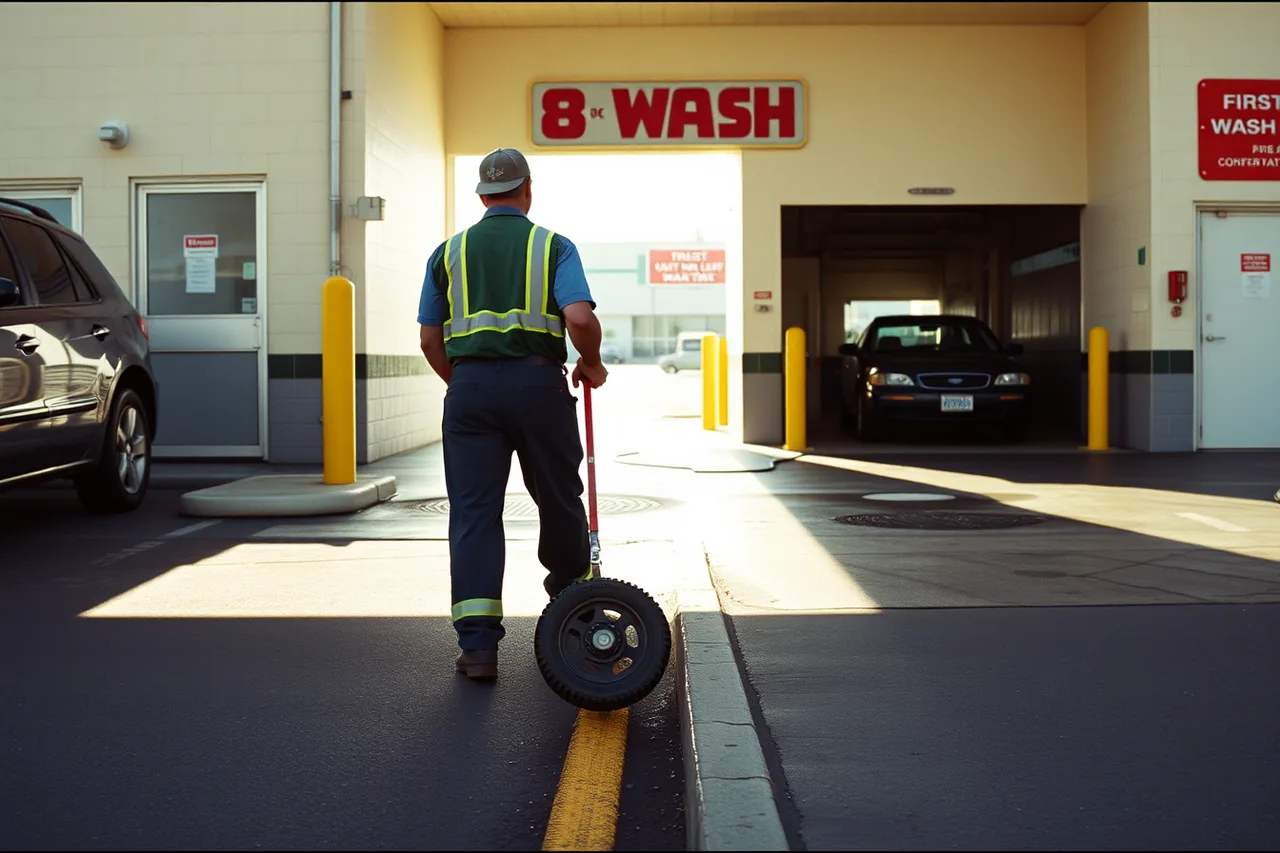
Use a wheel measure and a dry run. Each queued car needs 20 feet: 18 feet of stall plus 2 feet of gap. A 100-foot stack holds five cars, not ten.
| Check | Pass condition | Action if fail |
|---|---|---|
| Stack length from pay station to sidewalk | Last car's rear bumper stays on private property | Move pay station deeper |
| Exit stop line sight distance | 200 feet each way on a 35 mph road | Trim landscaping or move exit |
| Water ponding in queue lane | No puddle wider than 12 inches after rinse | Regrade lane to 1 percent slope |
After the check, compare the result to the good cars-per-hour rate for a car wash you expect.
What to do when a step goes wrong
The common failure is a queue that spills past the entrance and blocks the sidewalk. Mark a serpentine lane that turns 90 degrees before the wash bay. Do not add a second entrance; that splits the queue.
If the third car in line has its rear bumper in the sidewalk, the stack is too short by one car length.
If the pay station is already as deep as the lot allows, remove one decision point from the transaction. A prepay reader at the property line can shorten the stop without widening the lane.
When to stop and hand it to a professional
Stop and hand the plan to a traffic engineer when the required stacking length cannot fit without blocking a fire lane or public sidewalk. Site plan reviewers often require the queuing area to stay inside the property line and clear of any hydrant.
If moving the pay station and using a serpentine lane still leaves the last car over the sidewalk, the design has failed the measurable check. A professional can model the arrival rate with local traffic counts and set the exact stack length for the wash type. Use the increase car wash bay throughput guide before changing the lot.