Guides
Car wash equipment checklist: every item, with the reason behind it
A car wash equipment checklist works when each item ties to a bay's cycle time, water cost and permit condition, not to a generic template or vendor spec sheet.
What to take away
- Every line on the checklist should answer one questiondoes this item change cars per hour, cost per car, or a permit condition?
- Cycle time sets the ceiling on revenue per bay. A conveyor moves more cars than an in-bay automatic on the same footprint, and costs more to staff and maintain.
- Water and chemical cost per car is a daily operating number, not a one-time equipment spec.
- Three federal citations anchor the safety and water sideEPA WaterSense on vehicle washing, OSHA 1910.147 on energy control, OSHA 1910.1200 on hazard communication.
- Confirm the local rule with your state environmental agency, sewer authority and permit office. Those requirements vary by site and are not universal.
Start with the bay, not the catalog
A checklist written from a manufacturer's brochure lists equipment. A checklist written from the bay lists constraints. Cycle time is the first one: how many minutes from a car entering to that car leaving, multiplied by the hours you can actually run.
If a bay cycles a car every four minutes and you staff it for ten hours of real demand, the arithmetic is 150 cars, not the 240 a spec sheet implies. Demand rarely fills every hour. Peak stacking, not average volume, decides how much queue space and how many pay stations you need.
Write your own numbers as variables: cars per hour equals 60 divided by cycle minutes, times bays, times a utilization factor you set from your own traffic counts. Then check whether the revenue that produces covers the equipment payment.
Example: if the quoted equipment payment is $1,900 a month, a bay that runs 12 cars per hour for eight hours does 96 cars a day. Over 24 days that is 2,304 cars. The payment costs $0.82 per car. At 20 cars per hour, the same payment costs $0.49 per car. Volume decides whether the payment fits.
The checklist, item by item
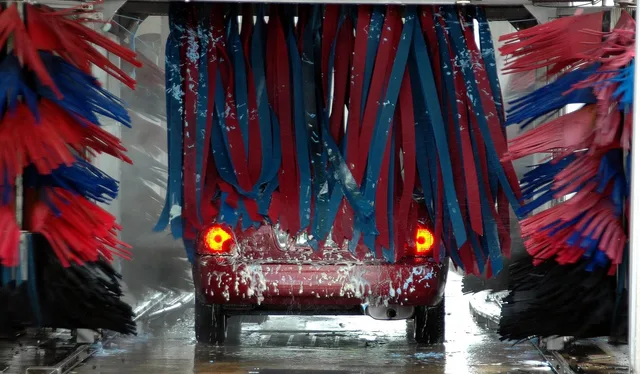
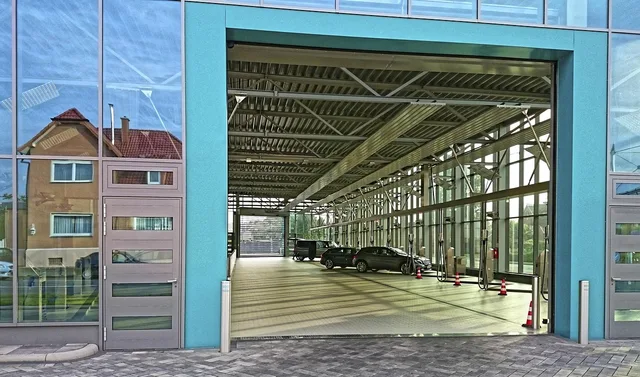
- Wash format.Conveyor tunnel, in-bay automatic, or self-service. Each sets a different cycle time, staffing level and water draw. The format decision comes before any equipment selection.
- Vehicle envelope.Maximum length, width, height and ground clearance the bay accepts. State where a lifted truck, a roof rack or a trailer gets declined, and who makes that call at the entrance.
- Water supply and reclamation.Incoming water, softening, reverse osmosis, storage, reclaim, separation, filtration and discharge behave as one system. Typical planning ranges are 10 to 20 gallons per car at self-service, 40 to 60 at in-bay automatic, and 80 to 150 at a conveyor. Reclaim typically cuts fresh water draw by 50 to 80 percent. Size to peak gallons per minute.
- Chemical delivery.Approved product, target concentration, injector or pump, water temperature and contact time. Set the range and the person who verifies it each shift.
- Preventive maintenance schedule.Nozzles, brushes, pumps, motors, belts, sensors, dryers and pay stations, ordered by failure risk and manufacturer guidance.
- Critical spares on site.Decide from failure history and lead time, not from a starter kit. A dryer motor with a three-week lead time belongs on the shelf.
- Energy isolation points.Every piece of equipment a technician will service needs a documented lockout point, safe access and lighting before the first service call.
- Replacement triggers.Set the conditions that retire an asset: water use per car, repair spend over 12 months reaching 50 percent of replacement cost, parts lead time over two weeks, or a compliance change.
Use this material as a decision aid for car wash equipment planning, not as a universal ranking or a compliance shortcut.
Car Wash Equipment Checklist
- Match equipment to wash format
- Specify vehicle and throughput limits
- Design water system as one asset
- Control chemical application
- Build preventive maintenance
- Hold critical spare parts
- Plan service and energy
Fill-in checklist
- Site address____
- Wash format____
- Peak cars per hour____
- Gallons per car____
- Peak gallons per minute____
- Equipment payment per month____
- Payment per car at peak volume____
- Water and chemical cost per car____
- Critical spares on site____
- Replacement triggerrepair spend reaches 50 percent of replacement cost in 12 months, or parts lead time exceeds ____ weeks.
- Permit sign-offs received____
What to verify before acting
Three federal sources give you checkable ground. None of them replaces your local authority.
EPA WaterSense at Work: Vehicle Washes describes conveyor, in-bay automatic and self-service systems, how water use is measured, and how reclamation is applied by wash stage. Use it to frame the questions you put to your equipment supplier.
OSHA 1910.147, Control of Hazardous Energy requires covered employers to establish energy-control procedures that prevent unexpected startup or release of stored energy during servicing. Your maintenance schedule and your lockout points are the same document.
OSHA 1910.1200, Hazard Communication requires a written program, labels, safety data sheets and employee training for hazardous chemicals. Detergent and drying agents count.
Discharge rules, water-use limits and reclamation requirements are set locally. Call your state environmental agency and your sewer authority, and get the answer in writing before you order equipment.
Common questions
How much does a starter setup cost?
Equipment price depends on format, site work and utilities. A self-service bay with basic pumps and a small reclaim package sits at the low end. An in-bay automatic with a dryer, pay station and water treatment sits higher. A conveyor tunnel with multiple arches is the highest.
Ask for a written quote that separates equipment, installation, electrical, plumbing and permits. Then run the monthly payment against the cars per hour from your own bay.
What size water tank and reclaim unit do I need?
Size from peak gallons per minute, not from bay count. Multiply gallons per car by the peak cars per hour, then divide by 60. A conveyor at 120 gallons per car and 20 cars per hour needs about 40 gallons per minute.
Add storage for at least one peak hour if the supply line is weak. Reclaim typically cuts fresh water draw by 50 to 80 percent. Check local discharge rules before you size the tank.
What permits and sign-offs do I need before ordering equipment?
Your permit office on discharge, your sewer authority on water, a licensed contractor on electrical and plumbing, and a qualified attorney or CPA on lease, tax and entity questions. No checklist substitutes for those signatures.