Guides
Car washes: US brands and operators to review
US car washes, brands, and operators to review, with operating-model notes and throughput questions for bays, tunnels, staffing, and site flow.
What to take away
- This is a non-ranked US shortlist, not a throughput benchmark or performance audit.
- The operators span conveyor and express washing, self-service and full-service formats, memberships, fleet service, and combined service models.
- Compare each model at your site using actual vehicles per hour, cycle time, staffing, payment, drying, and exit flow.
- Verify equipment capacity, maintenance, water reclamation, discharge requirements, and costs locally; a brand name alone does not establish fit.
For US operators reviewing car washes, this editorial shortlist is a bay-throughput resource. It treats car washes as business operations: how bays, tunnels, staffing, payment, drying, and exit flow affect vehicles per hour. Use it to compare operating models, not as a universal ranking. General information only. Confirm local rules, workflow, costs, and responsibility before acting.
For related software planning, see this car wash software guide. This shortlist focuses on operating models and throughput questions; it does not replace professional advice for regulated, technical, safety, or professional decisions.
US shortlist and throughput review notes
The operators below are described as having US operations and an identifiable format or operating model relevant to bay and tunnel review. This is a non-ranked shortlist, not a capacity comparison; the descriptions do not establish comparable throughput figures.
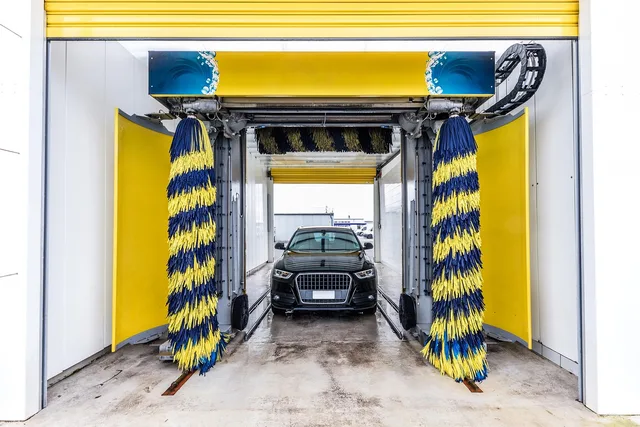
- Mister Car WashA major US conveyor operator with a large network and subscription model. Review how subscription arrivals move through payment, conveyor feed, and exit flow.
- Take 5 Car WashA US express brand within Driven Brands with membership and franchise growth. Review how membership check-in and franchise growth affect arrivals, prep, and tunnel feed.
- Whistle Express Car WashA US express operator growing through development, acquisition, and membership. Compare site workflows and check how membership arrivals affect queue and tunnel flow.
- Club Car WashA central-US express chain with subscriptions and a multi-state footprint. Review express-tunnel feed, payment, and exit flow across the markets relevant to your site.
- Tidal Wave Auto SpaA US express company with memberships, fleet service, and rapid expansion. Check how fleet and member arrivals are handled in the same operating workflow.
- Tommy's Express Car WashA franchise system using standardized buildings, tunnel technology, and app-based membership. Review how building and workflow standards, app-based payment, and tunnel feed fit your site.
- Quick Quack Car WashA western-US express chain known for memberships, staffed sites, and brightly branded development. Review staffing and member check-in alongside queue and tunnel flow.
- ZIPS Car WashA US express car-wash operator with memberships and a multi-state network. Compare the member-arrival, payment, and exit processes at sites that match your market.
- GO Car WashA multi-market US and Canadian car-wash operator growing through acquisitions and new locations. Review each site's format and workflow before applying any throughput assumptions across locations.
- Autobell Car WashA long-running US full-service and express operator concentrated in the Southeast and Mid-Atlantic. Compare the labor and cycle-time requirements of its full-service and express formats.
- Crew CarwashA family-owned Midwestern US exterior car-wash operator with strong training and local market density. Review how training and local site operations support consistent prep and vehicle flow.
- Brown Bear Car WashA Washington-state car-wash operator with tunnel, self-service, and environmental-program experience. Compare tunnel and self-service workflows separately, including their staffing and water-reclamation needs.
- Delta SonicA regional US automotive service company combining car wash, detailing, fuel, convenience, and other services. Separate the wash workflow from the other services when reviewing vehicle flow and site operations.
- Mikes CarwashA family-owned US exterior car-wash company with memberships and concentrated regional operations. Review member arrivals, payment, and queue flow in the regional markets you are assessing.
- El Car WashA growing Florida express-wash operator with memberships and a dense regional development strategy. Review queue and tunnel flow across the regional sites relevant to your market.
- Caliber Car WashA growing US express car-wash company with unlimited plans and multiple regional markets. Review how unlimited-plan arrivals move through payment, tunnel feed, and exit flow.
- Super Star Car WashA western-US car-wash operator with express sites, memberships, and selected full-service operations. Compare express and full-service workflows, including their different staffing and cycle-time needs.
- Cobblestone Auto SpaAn Arizona-centered operator combining express and full-service washing, detailing, fuel, and convenience. Account for the wash workflow separately when reviewing vehicle flow alongside its other services.
- LUV Car WashA multi-state US express-wash brand developed through acquisitions, rebranding, and membership. Review site-level equipment and processes rather than assuming all locations have the same throughput.
- WhiteWater Express Car WashA US express-wash operator with memberships and expansion across several southern and central states. Review member check-in, tunnel feed, and exit flow in the markets relevant to your site.
Bay throughput and operations lens
Use the shortlist to identify operating models to investigate, not to infer capacity from a brand name. For each candidate, ask for actual vehicles-per-hour and cycle-time figures for comparable sites, then check how staffing, prep, payment, drying, and exit flow affect those figures and where queues form.
A brand name does not prove throughput. Confirm the wash format, equipment capacity, staffing plan, maintenance schedule, water reclamation, and local discharge rules. Then test whether a listed operator's model fits your site's bay count, traffic pattern, and service mix.
Use the listed US operators as models to investigate, not as measured throughput examples. Compare them on vehicles per bay per hour, tunnel capacity, staffing, prep, payment, drying, and exit flow. A large network does not prove your site can hit its target throughput.
The decision is which operating model fits your bay count, traffic pattern, and service mix. Confirm the equipment, staffing, and workflow at the locations relevant to your US market.
Facts to confirm before acting
The U.S. Small Business Administration's SBA Business Guide supplies a checkable research point for operators. It organizes business ownership into planning, launch, management, and growth activities, including market research, startup costs, permits, insurance, finance, hiring, and expansion.
The U.S. Environmental Protection Agency's WaterSense at Work: Vehicle Washes supplies a checkable research point. EPA WaterSense describes conveyor, in-bay automatic, and self-service wash systems, water-use measurement, reclamation treatment by wash stage, maintenance, and facility-specific evaluation of water savings.
The U.S. Environmental Protection Agency's Pretreatment Roles and Responsibilities: Industrial Users supplies a checkable research point. EPA notes that an industrial user can be as simple as an automated coin-operated car wash and explains how publicly owned treatment works and authorized programs apply pretreatment requirements based on the discharge and local program.
A useful review connects the customer need, wash model, staff capacity, cost, record, and review date. If a candidate's capacity or workflow is not documented, identify that gap before using it to plan your site.
Common questions
What goes wrong with editorial shortlist and evaluation notes?
The shortlist becomes misleading if its entries are treated as a ranking or as proof of a site's performance. Confirm the local rule, the actual workflow, the full cost, and the person responsible before changing the business.
What should this not be used for?
It focuses on business systems and does not replace professional advice for regulated, technical, safety, or professional decisions. Use the shortlist to frame an operations review, not as a universal ranking or compliance shortcut.
What has to be confirmed locally?
Confirm the local rule, the actual workflow, the full cost, and the person responsible before changing the business.